"Truck driving" is not one job. The licence class you go for shapes the work you can take, the hours you keep and how far you can progress. Choosing well at the start saves a lot of money.
LR — Light Rigid
Vehicles: rigid over 4.5t up to 8t GVM, and light buses. Prerequisite: car licence held about a year.
The cheapest and quickest step above a car licence. Suits couriers, trades, catering, hire vehicles and community transport. If your employer keeps asking you to move a small truck and you legally cannot, this is the fix. It is not, however, a licence that opens up much heavy freight work.
MR — Medium Rigid
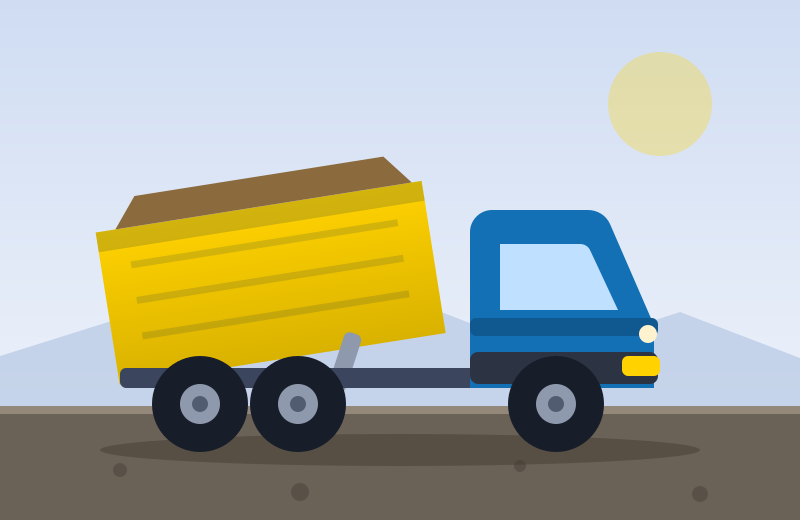
Vehicles: two-axle rigid over 8t GVM. Prerequisite: car licence held about a year.
A serious jump in capability for a modest extra cost over LR. Opens up removalists, waste collection, tippers, concrete agitators and a lot of local distribution. Usually home every night. For many drivers this is the sweet spot between cost and opportunity.
HR — Heavy Rigid
Vehicles: rigid with three or more axles over 8t GVM, plus buses. Prerequisite: car licence held about two years.
The class most job ads ask for. It covers the big rigid trucks and buses, and — importantly — it is the stepping stone to heavy combination work later. If you are serious about driving as a career and you qualify, HR is usually the smart target.
Going straight for the biggest licence you can is not always right. Going for the licence that matches the work you can actually get this year usually is.
HC and MC — the next steps
HC covers a prime mover with a semi-trailer. MC covers B-doubles and road trains. Both require you to have held the class below for a set period, so they are not a starting point — they are where you go after a year or two of solid rigid experience.
We train and assess LR, MR, HR and HC. If MC is your goal, HC is the step in front of you.
Where drivers go afterwards
A truck licence is a starting point, not a ceiling. Experienced drivers move into allocation and dispatch, yard supervision, driver training and assessing, compliance roles, or buying their own vehicle. All of those value people who actually drove the gear first.
Practical advice for your first year
Get the licence that matches available work, then build clean experience. Employers and insurers care far more about verifiable months behind the wheel than about how big your licence is on paper.
Not sure which class fits your situation? Call 0433 532 570 and we will give you a straight answer, even if it is a smaller licence than you were planning to buy.